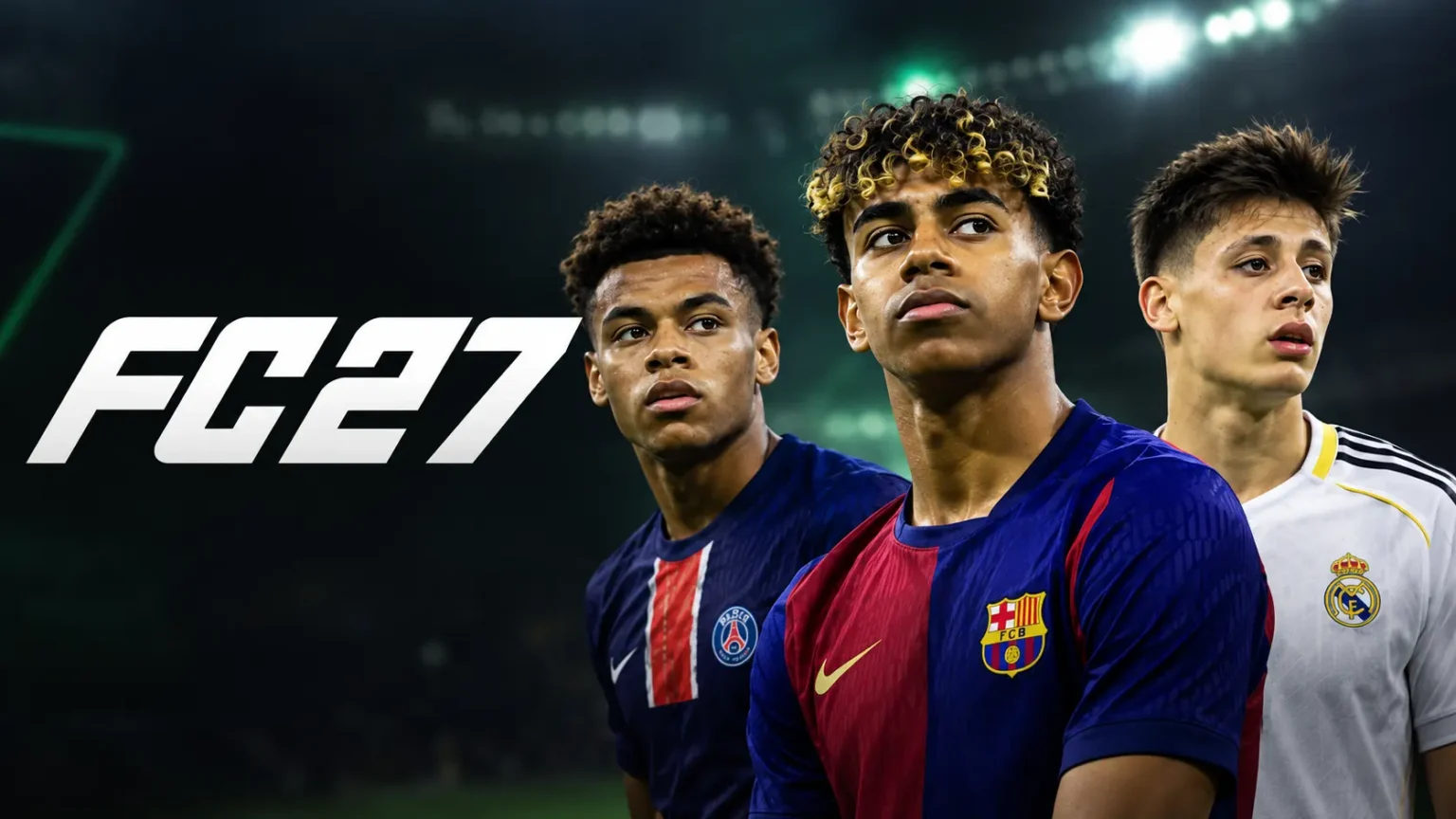
FC27 Career Mode: New Features, Changes & What to Expect
Table of Contents
FC27 Career Mode brings some significant changes to the single-player management experience, with a rebuilt transfer market, Dynamic OVR, new player growth systems, smarter AI recruitment and expanded Manager Live features among the highlights.
For players who spend dozens of seasons developing wonderkids, rebuilding clubs or climbing through leagues, the focus in EA FC27 Career Mode is increasingly on making decisions and player development less predictable. Transfers have more moving parts, ratings can fluctuate, and players can follow different career trajectories.
The result is a Manager Career that aims to create more variation from one save to another while giving managers additional control over how they build their squads.
What Is New in FC27 Career Mode?
The biggest FC27 Career Mode changes affect areas players interact with throughout an entire save rather than simply adding isolated menus or cosmetic additions.
Transfers have been redesigned, player ratings can become more dynamic, development has additional variables, AI clubs have more defined recruitment behavior, and Manager Live offers greater scope for creating and playing challenges.
How FC27 Career Mode Changes the FC26 Experience
FC26 introduced several ideas intended to make Manager Career less static, but EA FC27 pushes further into the systems behind squad building and player development.
One of the clearest differences is that footballers are no longer defined solely by a predictable progression from their starting overall toward a predetermined peak.
Dynamic OVR allows a player’s current overall rating to move in response to factors such as performances, morale, fitness and playing time.
Growth Profiles add another layer. Players can develop and decline differently depending on their profile, meaning two footballers of similar age and ability do not necessarily follow identical career paths.
That distinction could become particularly important several seasons into a save.
The Biggest FC27 Career Mode Features at a Glance
The headline changes include:
- A rebuilt transfer market
- Multi-stage transfer negotiations
- More detailed transfer clauses and payment structures
- Dynamic OVR
- Six Growth Profiles
- Dynamic Potential
- Improved AI squad building
- Expanded deep simulation
- More Manager Live creation options
- Improved unexpected events
- Career-focused gameplay refinements
Many of these additions complement the broader differences between FC26 and FC27. Players wanting a wider comparison beyond Career Mode can also see this FC 27 review and breakdown of what has changed from FC26.
EA FC27 Career Mode Gets a Rebuilt Transfer Market
Transfers are one of the most important parts of a long Manager Career, and FC27 attempts to make the market feel less like a sequence of isolated transactions.
Deals can develop over multiple stages, while other clubs have more opportunity to compete for targets.
Transfers Now Develop Through Multiple Stages
Instead of every transfer being a simple process of identifying a player, agreeing a fee and negotiating a contract, FC27 introduces more uncertainty around negotiations.
Managers can make enquiries before committing to negotiations, while rival clubs can develop an interest in the same players.
Transfer battles and potential hijacks mean waiting too long to complete an important signing can carry consequences.
There are also situations where negotiations can be revisited, providing more flexibility when an initial attempt fails.
The redesigned Transfer Hub brings these activities together, giving managers a clearer picture of targets and negotiations.
Delegating responsibilities to the Director of Football can also reduce the amount of manual negotiation required for players who prefer concentrating on tactics and matches.
New Clauses, Installments and Contract Options
The transfer system offers more ways to structure deals.
Rather than relying mainly on straightforward upfront fees, managers can encounter options such as:
- Transfer installments
- Performance-related bonuses
- Buy-back clauses
- First-refusal clauses
- Sell-on clauses
- Loan-back arrangements
- Player exchanges
These options can become especially useful when managing clubs with limited budgets.
A manager rebuilding a smaller team, for example, may have to consider the long-term cost of a transfer rather than simply whether enough money exists in the current budget.
That adds another strategic layer to FC27 Manager Career.
How Player Progression Changes in FC27 Career Mode
Player development has traditionally been one of the strongest reasons to commit to a long Career Mode save. FC27 changes how managers need to think about both current ability and future growth.
FC27 Career Mode Introduces Dynamic OVR
Dynamic OVR makes a player’s overall rating more responsive to what is happening during the season.
Form, morale, fitness, injuries and playing time can influence a footballer’s current OVR. A player performing consistently well can therefore look different from the same player struggling for minutes or confidence.
This is important because it makes squad management more closely connected to development.
Simply signing a talented prospect and leaving him on the bench may not produce the same outcome as carefully managing his minutes, performances and role.
It can also create interesting decisions with established stars. Poor form or fitness can affect how a player is perceived in the short term even when his underlying quality remains valuable.
Growth Profiles, Dynamic Potential and Youth Development
FC27 introduces six Growth Profiles that influence how players progress through their careers.
Not every footballer reaches his peak at exactly the same stage. Some can develop quickly, others may mature later, while certain players can maintain their level for longer before declining.
Dynamic Potential adds performance into the equation, making what happens on the pitch more meaningful for future development.
This can change youth recruitment considerably.
Managers may need to think beyond a youngster’s initial potential estimate and consider how coaching, opportunities and performances can shape his career.
For youth-focused saves, the combination of Growth Profiles and Dynamic Potential should make developing an academy less predictable than simply collecting high-potential teenagers and waiting for their ratings to rise.
Smarter AI Could Improve Long-Term Manager Career Saves
A Career Mode system only remains convincing if computer-controlled clubs continue making sensible decisions several seasons into a save.
EA FC27 Career Mode attempts to improve this through more defined AI recruitment strategies and deeper simulation.
AI Clubs Have More Realistic Transfer Strategies
Clubs can approach recruitment with different priorities.
Some may favor younger footballers who can develop over time, while others can focus on established players capable of immediately improving the starting XI.
Tactical suitability, player performance and financial considerations can also influence recruitment.
AI clubs can consider multiple targets rather than operating as though only one footballer exists for a position.
Player interest and relationships between clubs can introduce additional complications.
Together, these systems are designed to make the transfer market behave more like a connected ecosystem rather than a collection of transactions centered exclusively on the player’s club.
Deeper Simulation Expands the Career Mode World
FC27 expands deeper league simulation from five leagues to ten.
That matters because a long-term save depends heavily on what happens outside the player’s immediate club.
More detailed simulation can produce a richer football world in which league performances, player statistics and club developments continue around you.
Generated players also become increasingly important as real-world footballers eventually retire.
Improvements in this area can help later seasons maintain more believable squad structures instead of making Career Mode feel increasingly disconnected from its opening years.
New EA FC27 Manager Career Features
Not every Manager Career player wants the traditional experience of selecting a club and completing season after season.
Manager Live provides an alternative based around scenarios and challenges.
Manager Live Creator Challenges
EA FC27 expands the ability to create Manager Live challenges.
Players can design scenarios, publish them and discover challenges made by other players. Share Codes make it easier to distribute specific creations, including across supported platforms.
This creates possibilities beyond conventional saves.
A challenge might revolve around rescuing a struggling club, rebuilding a squad under particular restrictions or achieving an objective within a limited period.
For players who rarely reach season 10 or 15 of a traditional Career, shorter scenario-driven challenges provide another way to use the mode.
Unexpected Events and Manager Improvements
Unexpected Events return with additional possibilities capable of changing a season.
Injuries and financial complications such as points deductions can create situations managers must respond to rather than plan months in advance.
There are also presentation and customization improvements designed to make managing a club feel more complete.
These additions may not fundamentally change Career Mode individually, but they can help prevent every season from following the same pattern.
How Does FC27 Career Mode Gameplay Change?
Career Mode is not only about menus, scouting and transfers. The actual football needs to support the slower, more realistic style many offline players prefer.
Authentic Gameplay 2.0 and CPU Intelligence
FC27 continues to separate the needs of more authentic offline football from highly competitive online gameplay.
Authentic Gameplay 2.0 focuses on a football experience better suited to modes such as Career.
Changes to player movement, physical interactions and CPU behavior can influence how matches unfold against AI opponents.
For Manager Career players, improved CPU intelligence is particularly important. Even an excellent transfer system loses some of its value if every opponent behaves identically on the pitch.
Why Gameplay Changes Matter in Manager Career
Better gameplay can make squad construction more meaningful.
A physically strong striker should offer something different from a quick forward running behind the defense. A technically gifted midfielder should affect how a possession-based system functions.
When those distinctions are visible during matches, recruitment becomes about more than finding the player with the highest overall rating.
That creates a stronger connection between tactics, transfers and development.
What Is the FC27 Release Date?
The worldwide FC27 release date is September 25, 2026.
The Standard Edition includes the full game and its core modes, meaning players purchasing that edition can begin a Manager Career when their platform’s standard release becomes available.
FC27 Standard Edition Release Date
EA FC27 launches worldwide on September 25, 2026, although exact unlock timing differs by platform and region.
PC access begins globally around the transition into September 25, while console availability is based on local launch timing.
Career Mode is part of the full game rather than a separate release, so there is no additional wait specifically for Manager Career.
When Can You Play FC27 Career Mode With Early Access?
Eligible Ultimate Edition and Ultimate Plus Edition players received up to seven days of early access, beginning September 18, 2026.
Because early access covers the full game, those players can start Career Mode during the early-access period rather than waiting for the Standard Edition launch.
EA Play members can also access a limited early trial, while EA Play Pro provides full-game access under its applicable membership terms.
Is FC27 Career Mode Better for Long-Term Saves?
The new systems appear particularly focused on addressing problems that become noticeable several seasons into Career Mode.
However, there is an important distinction between promising systems and proven long-term balance.
Why Transfers and Progression Could Keep Saves Fresh
Dynamic OVR and Growth Profiles can make footballers less predictable.
At the same time, smarter AI recruitment and a rebuilt transfer market can make squad building more reactive.
This combination matters because predictability is one of the biggest threats to a long save.
If the same wonderkids always become superstars and AI clubs repeatedly make similar transfer decisions, experienced Career players quickly learn how to exploit the system.
More variables can make different saves develop in different directions.
Who Will Get the Most From FC27 Manager Career?
The FC27 Career Mode features should be particularly relevant to players who enjoy:
- Youth academy saves
- Road-to-glory careers
- Realistic transfer restrictions
- Journeyman careers
- Multi-season rebuilds
- Tactical squad building
- Manager Live challenges
Players interested mainly in short one-season careers will still encounter the transfer and gameplay changes, but many progression improvements become more meaningful over several seasons.
It is also worth treating judgments about long-term balance cautiously at launch. Systems such as AI transfers, player development and generated squads need multiple simulated seasons before their full impact becomes clear.
FC27 Career Mode: What the Changes Mean Overall
FC27 Career Mode focuses heavily on making management less predictable. The rebuilt transfer market adds more negotiation possibilities, Dynamic OVR connects player ratings with current circumstances, and Growth Profiles give careers different development patterns.
Smarter recruitment and deeper league simulation are equally important for players who want saves to remain believable several years into the future.
The biggest unanswered question is how well all these systems hold together after five, 10 or more seasons. On paper, however, FC27 Career Mode gives long-term Manager Career players considerably more variables to manage than simply buying high-potential talent and waiting for ratings to increase.
FC27 Career Mode FAQs
What are the biggest new features in FC27 Career Mode?
The biggest FC27 Career Mode features include the rebuilt transfer market, multi-stage negotiations, Dynamic OVR, six Growth Profiles, Dynamic Potential, improved AI recruitment, deeper league simulation and expanded Manager Live creation tools. Together, these systems focus on making transfers, player development and long-term squad building more dynamic rather than simply adding isolated features to existing menus.
When is the FC27 release date?
The worldwide FC27 release date is September 25, 2026. Standard Edition players receive the full game and its core modes at launch, including Career Mode. Exact unlock times can vary between PC and consoles and by region, so some players may technically gain access at different local times around the worldwide launch window.
Can you play FC27 Career Mode during early access?
Yes. Eligible EA FC27 Ultimate Edition and Ultimate Plus Edition players received up to seven days of early access beginning September 18, 2026. Because this provides access to the full game, Career Mode can be played during early access. EA Play also provides a limited trial, while eligible EA Play Pro members receive full-game access through their membership.
How does Dynamic OVR work in FC27 Career Mode?
Dynamic OVR allows a player’s current overall rating to respond to circumstances during a Career Mode season. Factors including form, morale, fitness, injuries and playing time can affect a player’s rating. This means managers need to consider how footballers are performing and being used rather than assuming their displayed overall will follow a completely predictable progression throughout a save.
Has youth development improved in EA FC27 Career Mode?
FC27 expands player development through Growth Profiles and Dynamic Potential, giving young players more varied career trajectories. Performance and development circumstances become more important, while players can reach their peaks and begin declining at different stages. For youth-focused managers, this should create more uncertainty around prospects and make playing time, coaching and individual performance more meaningful across long-term saves.